The most common mistakes when buying corporate merchandise
At first glance, buying corporate merchandise looks like a simple job: pick a few products, print the logo and you are done. But anyone who has been through it knows the devil is in the detail, and a small oversight can turn a gift meant to delight into a branded disappointment.
At Driza Studio — a creative studio with a print shop and workshop in Boadilla del Monte (Madrid) — we have spent more than 20 years helping companies of every size create welcome packs and corporate gifts that truly represent their brand. Along the way we have seen — and fixed — the same mistakes again and again. That is why we want to share the most frequent ones when buying corporate merchandise, so your next project comes out perfect first time.
01 · PrioritiesChoosing on price rather than brand perception
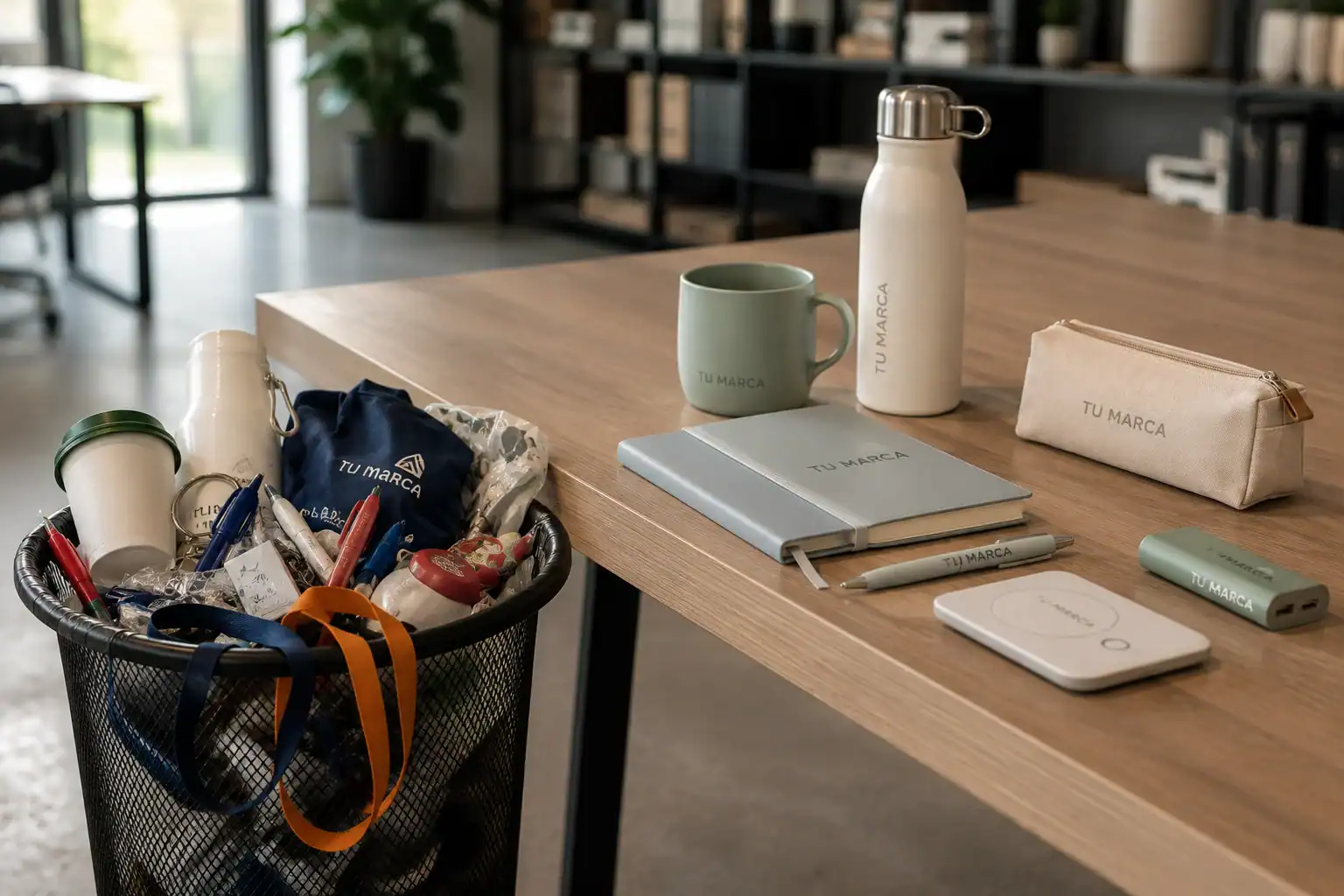
The number one mistake, and probably the most widespread, is deciding purely on the lowest unit price. It is understandable: budgets are limited and merchandise is usually managed from tight budget lines. Yet every object carrying your logo is, in reality, a silent ambassador for your brand. A pen that breaks on its second use or a notebook with badly cut pages says, without meaning to, that your company does not care about details.
Buying corporate merchandise with only the immediate cost in mind usually ends up expensive in the medium term: products that get thrown away, employees or clients who never use them and a lost opportunity for emotional connection. The key is to value cost per impact, not cost per unit: a quality product used for years generates far more brand impressions than ten cheap products that end up in a drawer.
02 · TimingUnderestimating delivery times
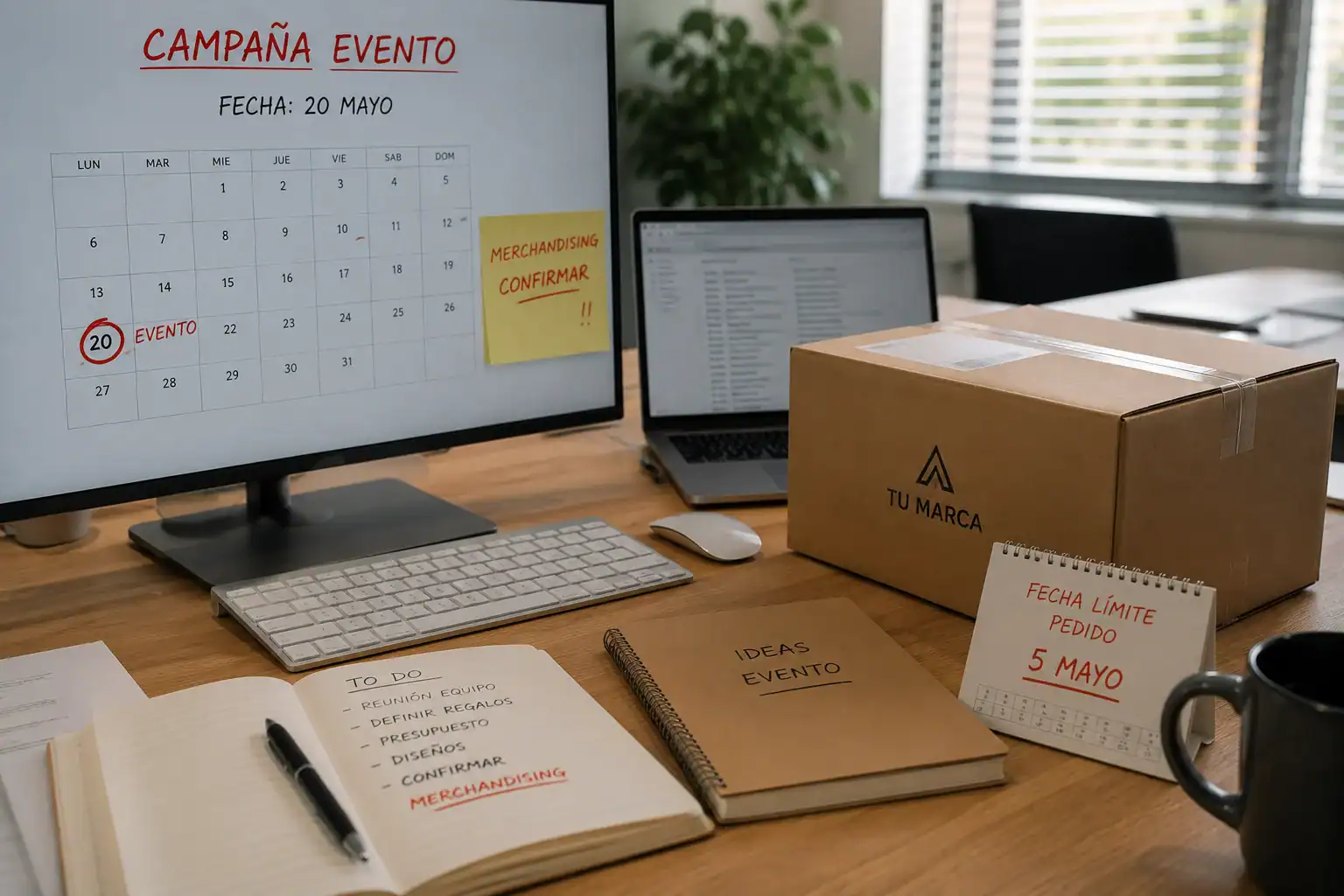
Producing personalised corporate merchandise — especially when it includes custom packaging, engraving or premium finishes — takes time. One of the most frequent mistakes is ordering with margins that are far too tight, trusting that “there is always time”. The reality is that product selection, design approval, production and shipping can add up to several weeks.
The problem gets worse around key dates such as Christmas, corporate events or product launches, when demand soars and suppliers’ schedules are full. Planning at least four to six weeks ahead is not a whim: it is the difference between a calm, well-executed project and a race against the clock full of improvisation.
- Ask for a quote and a physical sample before confirming large quantities.
- Keep extra margin for logistics or customs surprises.
- Match the delivery date to the actual event, not to the deadline.
03 · IdentityGiving generic products with no personality
Another common mistake is turning to the standard “products with logo” catalogue without adapting anything to the brand’s real identity. Basic pens, keyrings or notebooks with a bland logo print are easy to get, but also easy to forget. The corporate merchandise that really works feels like a coherent extension of the brand: its colours, its tone, its way of communicating.
This does not mean spending a fortune on exclusive pieces, but taking the time to think about which products make sense for your audience and how they can reflect your company’s values. A welcome pack for a new employee should not look like any other company’s welcome gift: from the very first contact it should convey the culture and care that define your organisation.
“Corporate merchandise is not spending on objects, it is an investment in how people will remember you.
Driza Studio
04 · StrategyImprovising instead of planning with an expert supplier
Many companies treat buying corporate merchandise as a one-off, isolated task rather than a project that deserves professional advice. The result is usually a mix of improvised decisions: one product chosen because it was on offer, another because a colleague asked for it, packaging that matches nothing… The whole loses coherence and, with it, impact.
Working with a specialist studio makes the difference because it brings an overall view of the project: from choosing products aligned with your brand to designing the packaging, coordinating deadlines and production. At Driza we design it and make it in our own workshop, so a good supplier does not just sell products — it proposes solutions.
- Define the goal of the merchandise: loyalty, welcome, thanks or promotion.
- Choose products consistent with the brand’s identity and values.
- Design the packaging and finishes as part of the experience, not as an extra.
- Plan production and logistics with enough margin.
- Check a physical sample before approving the final order.
Before launching any merchandise project, first define the emotion you want to spark in the person receiving it. From there, everything — product, packaging, message — falls naturally into place.
05 · ExperienceForgetting the unboxing experience
The last big mistake, and perhaps the most underrated, is forgetting that the moment of opening the gift is part of the message. An excellent product inside a generic box loses much of its strength. The unboxing experience — the packaging, the order of the items, small details such as a handwritten card or a careful closure — is what turns a simple delivery into a memorable moment.
Companies that look after this understand that corporate merchandise does not end when the product leaves the factory, but when it reaches the hands of the person receiving it and sparks a positive reaction. That instant is a unique opportunity to reinforce the brand, and wasting it by not investing in packaging that lives up to it is, quite simply, an avoidable mistake.
Buying corporate merchandise successfully is not a matter of luck, but of avoiding these common mistakes: thinking beyond price, planning ahead, caring for brand identity, relying on professionals and designing every detail of the experience. When all of these elements fit together, the result is not just a nice gift, but a real tool for connecting with your employees, clients and partners.